




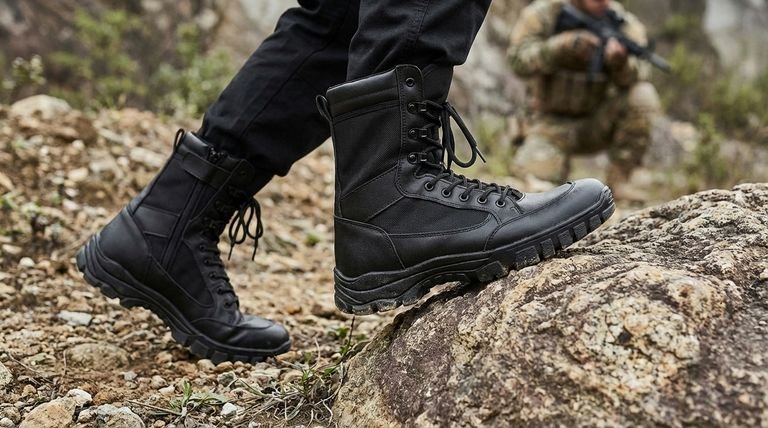
There was a time when tactical footwear meant one thing above all else: durability at the expense of everything else. Heavy leather construction, rigid shanks, and unforgiving break-in periods were accepted as the cost of boots built to perform under demanding conditions. That trade-off no longer holds. Advances in materials science, construction technology, and footwear engineering have produced a generation of lightweight tactical boots that deliver the protection, stability, and durability that work, hiking, and tactical environments demand — without the weight and rigidity that made traditional tactical footwear physically punishing over long days and high-mileage terrain.
For men and women who spend significant time on their feet — whether in professional field environments, on demanding trails, or in the kind of casual and sport contexts where versatility and performance intersect — understanding what modern lightweight tactical boots offer is the foundation for making a genuinely informed footwear decision.
What Makes a Tactical Boot Lightweight Without Compromising Performance
The engineering challenge behind lightweight tactical boots is straightforward to state and complex to solve: reduce weight without reducing the structural integrity, protection, and durability that define tactical footwear. The solutions that have emerged across the industry address this challenge through three primary categories of innovation:
Advanced synthetic uppers. Traditional full-grain leather uppers — durable and protective but heavy — have been supplemented and in many constructions replaced by technical synthetic materials: nylon mesh composites, ripstop fabrics, and reinforced synthetic overlays that provide targeted protection at high-wear points while reducing overall upper weight significantly. These materials also offer faster drying times and improved breathability relative to full leather construction — practical advantages for wearers operating in wet conditions or high-output environments where heat and moisture management matter.
Lightweight midsole technology. The midsole — the layer between the outsole and the insole responsible for cushioning and energy return — has historically been a significant contributor to overall boot weight. Modern EVA and polyurethane midsole formulations deliver comparable cushioning to older, heavier compounds at a fraction of the weight. For wearers covering significant daily mileage on foot, the reduction in midsole weight compounds across thousands of steps into meaningful fatigue reduction by end of day.
Streamlined construction methods. Direct-attach and cement construction methods used in modern lightweight tactical boots eliminate the welt and heavy stitching of traditional construction without sacrificing bond strength — reducing both weight and profile while maintaining the durability required for demanding use environments.
The Performance Demands Lightweight Tactical Boots Address
Understanding who benefits most from lightweight tactical boots requires understanding the range of environments and use cases they are built for — which is considerably broader than the military and law enforcement contexts the term tactical originally implied:
Professional field use. Security professionals, emergency responders, construction workers, and field service technicians share a common requirement: footwear that provides protection, stability, and support across long shifts in variable conditions without accumulating the fatigue that heavy traditional boots impose by midday. Lightweight tactical boots address this directly — maintaining the ankle support, toe protection, and outsole grip of full tactical footwear while reducing the weight that makes eight-to-twelve-hour shifts physically taxing on the feet and lower legs.
Hiking and outdoor use. The overlap between tactical and hiking footwear has grown significantly as trail hikers have recognized the ankle support, outsole traction, and construction durability of tactical boots as advantages on demanding terrain. Lightweight tactical boots bring these advantages without the weight penalty that makes traditional tactical footwear less competitive against dedicated trail boots on longer approaches and higher-mileage days.
Casual and everyday use. The aesthetic versatility of modern lightweight tactical boots — available in colorways and silhouettes that translate outside overtly professional or outdoor contexts — has made them a practical everyday footwear choice for men and women who want the support and durability of a purpose-built boot without the visual weight of traditional tactical styling.
Sport and training use. Functional fitness, obstacle course racing, and military-style training programs place demands on footwear that casual athletic shoes cannot reliably meet — lateral stability under load, outsole grip on varied surfaces, and construction durability through repeated high-impact use. Lightweight tactical boots built for training contexts provide these capabilities at weights competitive with dedicated cross-training footwear.
Key Features to Evaluate When Choosing Lightweight Tactical Boots
Not all lightweight tactical boots are engineered to the same standard. For buyers making a serious footwear investment, the evaluation criteria that separate a genuinely high-performing boot from one that simply markets itself as tactical:
Weight relative to protection level. The target weight range for a genuinely lightweight tactical boot — defined as a boot that delivers full tactical protection without the fatigue of traditional construction — is typically between 28 and 36 ounces per pair depending on height and protection level. Boots claiming lightweight status above this range warrant closer scrutiny of whether the weight reduction has been achieved without compromising structural integrity.
Outsole compound and lug pattern. Outsole performance in tactical boots requires grip across multiple surface types — wet pavement, loose gravel, mud, and hard pack — rather than optimization for a single surface. Vibram and equivalent-quality outsole compounds with multidirectional lug patterns provide the broadest surface versatility. Oil and slip resistance ratings are relevant for professional use environments where floor surface conditions vary.
Ankle support architecture. Lightweight construction should not come at the expense of lateral ankle stability — the most important structural function of a tactical boot relative to a low-cut shoe. Reinforced heel counters, structured ankle collars, and internal support shanks that maintain rigidity under lateral load are markers of a boot that delivers genuine ankle support rather than simply covering the ankle.
Waterproofing and breathability balance. Full waterproof membrane construction — Gore-Tex and equivalent technologies — provides complete water exclusion but reduces breathability, making boots warmer in high-output use. Water-resistant treatment without full membrane construction provides adequate protection in light precipitation while maintaining better breathability for wearers operating in hot or high-exertion environments. Matching waterproofing level to primary use environment produces better all-day comfort than defaulting to maximum waterproofing regardless of context.
Break-in period. A genuinely well-constructed lightweight tactical boot should require minimal break-in — the synthetic materials and modern construction methods used in quality lightweight boots conform to foot shape more rapidly than traditional leather construction. Boots that require extended break-in periods are typically built with materials and methods more consistent with traditional heavy tactical footwear than genuine lightweight construction.
Men’s and Women’s Fit Considerations
Tactical boots historically skewed toward men’s sizing and last shapes — a significant practical limitation for women whose foot geometry differs meaningfully from the male average. Modern lightweight tactical boot ranges that include genuine women’s-specific lasts — not simply scaled-down men’s sizing — provide better fit, more appropriate support placement, and more comfortable all-day wear for female wearers. Women evaluating tactical boots should specifically confirm whether the boot is built on a women’s last or simply offered in women’s sizes on a men’s last, as the distinction has significant implications for comfort and support under sustained use.
The Investment Case for Quality Lightweight Tactical Boots
Tactical boots represent a footwear category where the cost-per-wear calculation strongly favors quality investment over budget alternatives. A well-constructed lightweight tactical boot — properly cared for and resoled when the outsole wears — will outlast multiple pairs of budget alternatives in demanding use environments. The initial price premium of a quality boot amortizes over years of reliable performance rather than months of degrading support and premature structural failure.
For wearers who depend on their footwear for professional performance, physical safety, or the enjoyment of demanding outdoor pursuits, that investment case is straightforward — and the cost of inadequate footwear, measured in fatigue, injury risk, and premature replacement, consistently exceeds the premium of buying well the first time.
Find the Right Lightweight Tactical Boot for Your Demands
Performance footwear decisions deserve more than guesswork. BootsPlusMore carries a curated range of lightweight tactical boots built for the full spectrum of work, hiking, casual, sport, and tactical use — with the selection depth and product knowledge to help every buyer find the boot that matches their specific environment, use case, and performance requirements. Explore the full collection and invest in footwear that performs as hard as you do.
