


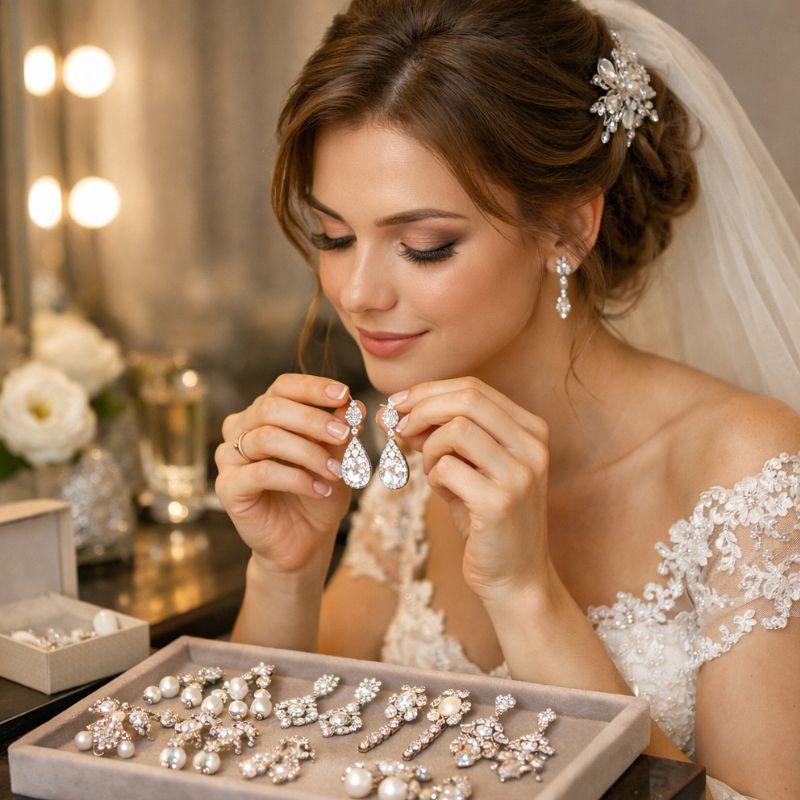
Most brides settle the dress first, the shoes second, and the jewelry somewhere in the final fortnight, which is precisely backward for anyone drawn to period pieces. Antique wedding earrings are not interchangeable accessories pulled from a rack; each pair is a single surviving object with its own proportions, metal color, and stone character, and the right one deserves to be found early enough to influence everything around it. Give yourself the time, and the search becomes one of the more pleasurable parts of the planning.
Why antique earrings photograph differently
Diamonds cut before the twentieth century were faceted for candlelight, not for showroom spotlights. Old mine and old European cuts have smaller tables, higher crowns, and chunkier facets, which produce broad flashes of color rather than the fine white scintillation of a modern brilliant. Under warm reception lighting and in photographs taken indoors, that difference is visible. Rose cuts behave differently again, with a flat back and a domed, faceted top that glows rather than sparkles.
The metals matter as much. Victorian pieces often use rosy or yellow gold with a soft patina that flatters warm skin tones and reads beautifully against ivory and champagne fabrics. Edwardian and Art Deco earrings tend toward platinum, which stays cool and crisp against stark white.
Reading the eras
Victorian (roughly 1837 to 1901). Expect gold, seed pearls, garnets, turquoise, and sentimental motifs. Drops are often modest in scale. These suit soft, romantic gowns with lace or ruffled detail, and they pair well with a loose updo.
Edwardian (roughly 1901 to 1915). Platinum and diamonds worked into lacy, pierced designs called milgrain and filigree. The effect is delicate and slightly airy. Ideal for a fitted silk or crepe gown where the jewelry should whisper rather than announce.
Art Deco (roughly 1920 to 1935). Geometry, strong lines, calibrated colored stones, and real architectural presence. These carry a plain column dress or anything with a bare shoulder, and they are the safest choice for a bride who wants the earrings to be the statement.
Retro (roughly 1935 to 1950). Bold yellow and rose gold, scrolled volume, larger colored stones. Excellent with heavier satin and with the trumpet silhouettes that have returned to favor.
Neckline and hair come first
Two practical rules resolve most indecision. First, if the neckline has detail, the earrings should not compete. A high collar, a beaded bodice, or an illusion neckline calls for studs or a short drop. A strapless or bateau neckline leaves open space that a longer drop fills naturally.
Second, decide the hairstyle before you decide the length. Hair worn down absorbs a short earring entirely; you will see almost nothing of it in photographs. An updo or a low chignon puts the whole earring on display and rewards a more elaborate pair. If you plan a veil with a blusher, check that the earrings sit clear of the fabric so nothing snags during the ceremony.
What to check before you commit
Antique earrings were made for ears that were pierced differently, or not at all. Many Victorian and Edwardian pieces originally had screwbacks, kidney wires, or shepherd’s hooks. Converting to modern posts is common and generally acceptable to collectors when done well, but ask whether it has been done and by whom.
Beyond that, look at closure security above all else. A drop that swings freely for eight hours needs a butterfly or a locking back you trust. Confirm that stones sit tight in their settings, that any pearls have been restrung within recent memory, and that the two earrings genuinely match, since replacements and marriages of unrelated singles do circulate. Ask about weight as well. A heavy pair that feels charming in the first hour can pull uncomfortably by the last dance.
Buying with confidence
The single most useful thing you can do is buy from a specialist who handles period jewelry every day and will tell you plainly what has been repaired, replaced, or refitted. That candor is what separates an heirloom purchase from a gamble, and it is what makes the piece worth passing down.
If you would like to see what genuine period pieces look like when they have been properly examined and honestly described, browse the current collection at Gesner Estate Jewelry, where every piece is documented and hand selected. Your something old is out there already, and it has been waiting a century for the occasion.