



Anyone who trains seriously accumulates a great deal of clothing and wears about a third of it. The pieces that survive a full season are rarely the ones that looked most appealing in the shop, and choosing dancewear that lasts comes down to a small number of things that are easy to check and easy to overlook. Fabric behavior, fit under movement, and how a garment holds up to repeated washing determine almost everything about whether a piece stays in rotation or migrates to the bottom of the bag by November.
Fabric does most of the work
Two properties matter more than anything printed on a label.
The first is stretch recovery. Any knit will stretch. The question is whether it returns to shape after three hours of class or stays permanently distorted at the knees and elbows. Blends containing a meaningful proportion of spandex or elastane recover well. Fabric that feels loose and slack straight out of the wash has already told you what it will do by week six.
The second is moisture handling. A studio in August and a studio in January are different environments, but both produce sweat. Fabric that holds moisture becomes heavy, clings unpredictably during turns, and takes forever to dry between sessions. Fabric that moves moisture away keeps its weight and behavior consistent from the first combination to the last.
Seam placement is the quiet third factor. A seam sitting directly where a leg meets a floor, or where a strap crosses a shoulder that carries weight, will make itself known during a long rehearsal.
The layer most dancers skip
Warm-up layers get treated as optional, and they are the single most underrated item in the bag.
Muscle performs better warm. Warm tissue is more elastic, more responsive, and considerably less prone to strain, which is the whole reason class opens the way it does. That advantage disappears faster than most dancers expect. Sitting through twenty minutes of notes or waiting for a stage call lets muscle temperature drop back toward baseline, and the next thing asked of the body is often a full-effort jump.
Layers you can pull on quickly and take off just as fast solve this. Joggers, wrap tops, and knit shorts exist to be added and removed repeatedly through a long day. The test of a good warm-up layer is whether it goes on over shoes without a fight and comes off in one motion when the choreographer calls you back.
Fit is decided in motion
Standing in front of a mirror tells you almost nothing about how a garment will behave. Fit is a movement question.
Raise both arms overhead and check whether the top follows or rides. Go to the floor and roll through. Test a développé and see whether the leg opening stays put. Turn and see whether anything shifts and needs adjusting. Anything that requires a discreet fix during class will require it every single class, and that adjustment costs attention you would rather spend elsewhere.
For anything with straps, the check is whether they hold through inversions and floor work without digging into the shoulder.
Care decides what a garment actually costs
Technical fabric is undone faster by laundry habits than by dancing.
Skip fabric softener entirely. It coats fibers and destroys moisture-wicking performance, which is the property you paid for. Wash cool, and turn garments inside out to protect prints and surfaces. Air dry rather than tumble, since heat is what breaks down elastane and turns a well-fitting garment into a slack one.
Rotate pieces rather than reaching for the same favorite daily. Elastic recovers with rest, and a garment worn every session ages roughly three times as fast as one in a rotation of three.
Building a season’s kit
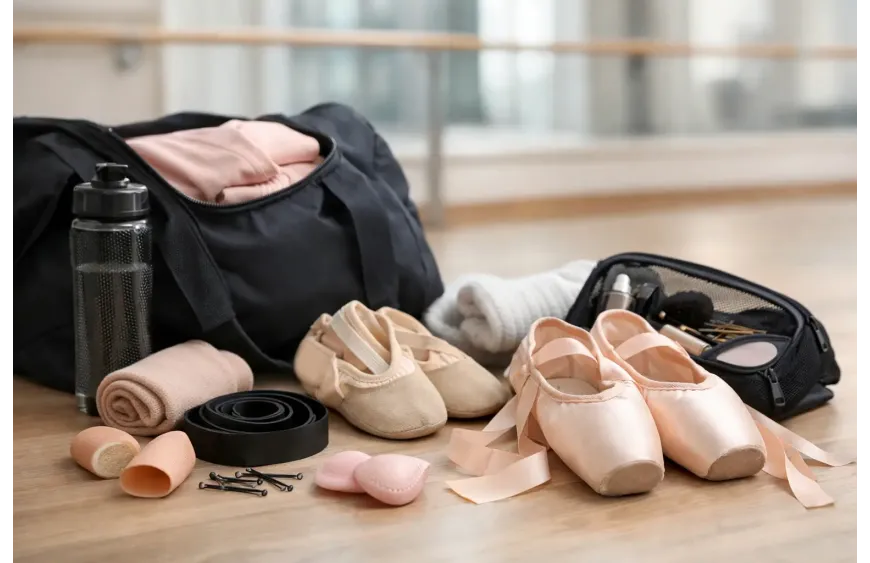
A workable core: two or three pieces you can train in comfortably, one warm-up layer that travels everywhere, one set kept clean for auditions and performances, and a spare of whatever you wear most, because something always fails at the worst moment.
Brands built specifically for dance tend to understand this better than general activewear, because the movement demands are different. Tiger Friday designs and manufactures its range in the United States with those demands in mind, across a full spread of sizes and colors.
Choose for how you move, care for what you buy, and the bag gets lighter and considerably more useful.